
publications
Food Production, Storage, and Consumption in Urban and Rural Residences in and around Florence, 1384-1432
Forthcoming
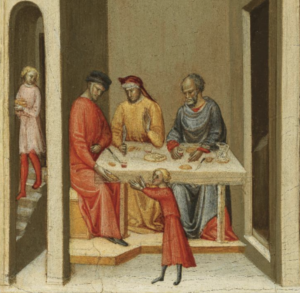
This study, based on more than 1,100 unpublished Florentine domestic inventories of urban residences in Florence, countryside villas, and farms covering the period 1384-1432. Among these thousands of objects, a significant presence of various and significant food items emerges in different areas of these households: they reflect the rural possessions of the owners and the role of villas and palaces at the center of a family network involved in food production, transformation, and storage. The accumulation of food served to counter insecurity stemming from wars and weather, and to mitigate the frequent fluctuations in prices, which are often documented. This essay unveils the diversity of late medieval food habits, their economic impact, and their place within Florentine households between the Trecento and Quattrocento periods.

Early Florentine Suburban Villas 1388-1429
Annali di Architettura: rivista del Centro internazionale di studi di architettura Andrea Palladio, 38 (2026): 11-22.
This study introduces a body of detailed household inventories that sheds new light on the original appearance and functions of numerous case da signore around Florence between the late fourteenth and early fifteenth centuries, including residences that would later develop into prominent Renaissance villas—such as Pitti’s Rusciano, Cavalcanti’s Bellosguardo, and the Medici villas at Lappeggi, Marignolle, and Fiesole. These room-by-room inventories make possible a nuanced analysis of the forms and uses of rural properties, typically organized around a fortified core with a tower. While many retained defensive features, by the Trecento they had also become comfortable residences in which Florentines recreated aspects of the lifestyle enjoyed in their urban homes. The evidence confirms the dual role of the rural residence: on the one hand, a productive investment at the center of an agricultural estate; on the other, a setting for intellectual life and leisure, equipped with guest accommodations, substantial collections of artworks and books, and, above all, a sala. This defining space closely mirrored the multifunctionality of its urban counterpart and served as the principal setting for much of the social and cultural activity described in contemporary literature.

Villas as Displays of Power and Territorial Control in the Florentine Countryside between the Late 14th and Early 15th Centuries
The crossroad city. Relations and exchanges, intersections and crossing points in urban realities / La città crocevia. Relazioni e scambi, intersezioni e incroci nelle realtà urbane, edited by Emanuela Garofalo and Armando Antista, Torino 2026, p. 167
This study examines over 300 inventories of rural properties owned by Florentine citizens during the Albizzi oligarchy (1384–1432). These records reflect a well-established lifestyle in which rural estates complemented urban residences, anticipating later scholarship on the Renaissance villa. The listed objects and spatial functions reveal their agricultural, military, and socio-cultural roles. Notable examples include the villas of Rusciano and Bellosguardo near Florence, Il Palco outside Prato, and a castle near Arezzo.

Female Actors and Gendered Spaces Inside the Florentine Home between Trecento and Quattrocento
Woman & Gender in Trecento Art and Architecture, ed. by Judith Steinhoff (Turnhout: Brepols, 2026), pp. 173-186
My essay presents the principal findings of a survey of 1,100 unpublished domestic inventories recorded by the Magistrato dei Pupilli and preserved in the Archivio di Stato in Florence, dating to the period of the Albizzi oligarchic government (1384–1432).
This remarkable corpus provides exceptionally detailed evidence of the architectural environments in which women—whether senior or junior members of the family, servants, or enslaved persons—operated both independently and as integral parts of the household.
Multiple facets of their lived experience emerge through their possessions, the spatial distribution and iconography of artworks, the devotional use of women’s prayer books, the presence of exotic goods, the strategies of display, and the instruments employed in their daily labor. The inventories encompass not only urban dwellings in Florence but also villas and residences dispersed across the Tuscan countryside, affording a rare opportunity to reconstruct the gendered spatial dynamics of the Tuscan house between the Trecento and Quattrocento.
Iconography and Display of Panel Paintings in Urban and Rural Residences in Florence, 1384-1432
Artistic Encounters in Trecento Italy, ed. by Theresa Flanigan and Trinita Kennedy (Turnhout: Brepols, 2026)
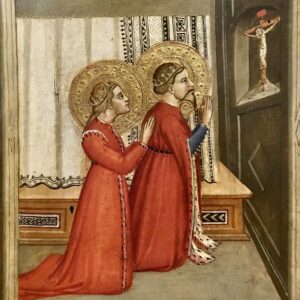
The quantity and quality of artworks inside private residences along Fifth Avenue in New York rival the celebrated institutions that populate Museum Mile. Similarly in Florence patrons living at the dawn of the Renaissance decorated their private residences with works of art equal in variety and number to those in large institutions such as churches, convents,and public palaces. The presence of artworks in domestic settings in late Trecento and early Quattrocento Florence, however, has received relatively little scholarly consideration because of the comparative lack of data published on Florentine houses and country homes.
This paper introduces information about artworks kept in domestic residences in Florence and its territory during the period of the Albizi oligarchic government between 1384 and 1432. More than 1000 largely unpublished inventories describing urban and rural residences in Florence and nearby cities have been studied to understand the dissemination, strategies of display, and iconography of works of art in private households. The variety of residences described in these lists allows for the exploration of a much wider swath of Florentine society, overcoming the limitations of previous studies based on a small number of prominent families. In this paper, I will focus my discussion on panel painting, the most common typology of art of this period.
Towards the Renaissance palace typology: Palazzo da Uzzano’s architectural innovations, 1408-17
Annali di Architettura, 34 (2022), 19-36
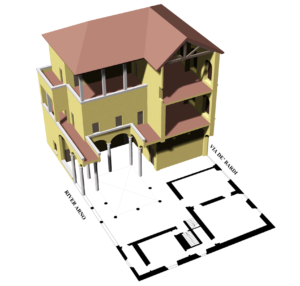
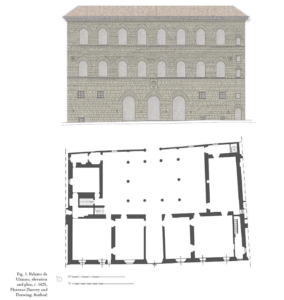
This study aims to introduce a palace built by the brothers Agnolo and Niccolò da Uzzano between 1408 and 1417 as a crucial turning point for the development of the Renaissance Florentine palace typology. Additionally, it shows how the Uzzano design responds to the location on the River Arno and how it embodies the new prominent financial and political status of its owners. The ground-floor plan displays three features that were unique at the time of its construction and became the standard design for palatial domestic architecture built in Europe for the following three centuries: first, a regular courtyard at the center with four loggias; second, the alignment of the main entrance with the courtyard; and third, the location of the main staircase of the palace at the end of the loggia parallel to the main facade.
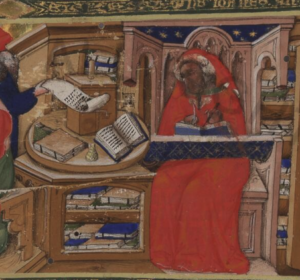
Prima diffusione delle opere di Giovanni Boccaccio a Firenze: Nuove acquisizioni dal Magistrato de’ Pupilli avanti il Principato (1386-1438)
co-author Elsa Filosa
Studi sul Boccaccio, 50 (2022), 333-365
In the ninth volume of Studies on Boccaccio (years 1975-76), Christian Bec published an essay entitled “Sur la lecture de Boccace à Florence au Quattrocento,” in which he included a list of the works of Giovanni Boccaccio found within domestic inventories, preserved in the Magistrato dei Pupilli archive before the Principate of the State Archive of Florence. The research presented here relies on a new reading of the domestic inventories preserved in the archive. Thanks to this reading, many more inventories can be brought to light: In addition to the 559 inventories studied by Bec to search for the presence of books in domestic environments before 1440, another 551 can now be added, providing a more complete idea of the private readings of the Florentines during those years.
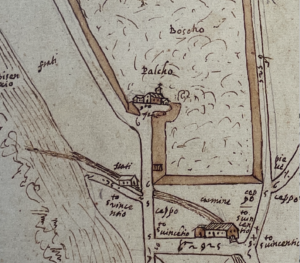
La Villa del Palco di Francesco di Marco Datini (1392-1410)
Archivio Storico Pratese, 96-97 (2022), 133-164
The focus of this study is the suburban villa built by the merchant Francesco di Marco Datini north of Prato, researched through detailed household inventories, the expenses annotated during the construction, and cartographic representations. The result shows how the villa was a true extension of Datini’s palace located in the center of the city, both socially and financially, and enjoyed the same careful frescoed decorations and furnishing.
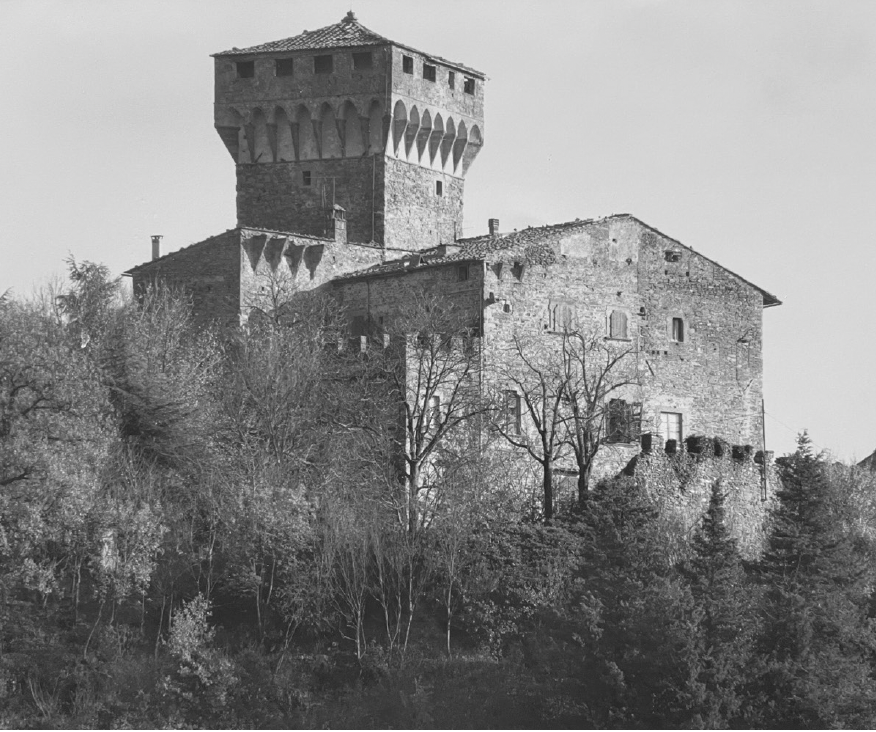
Simone di Ser Piero della Fioraia, la sua residenza di Castelnuovo nel 1424 e un inedito Giotto
Memorie Valdarnesi dell’Accademia del Poggio, 188 (2022), 43-66
Castelnuovo is a medieval fortification that still stands today at the southern entrance of the Arno valley north of Arezzo, an obligatory road for accessing the Casentino. A key moment in the history of the castle was in 1385, when Arezzo and its territory were conquered by Florence, and Castelnuovo was the prize presented by Florence to one of its most important public officials, the Florentine merchant Simone di Ser Piero della Fioraia. Thanks to the transcription of an important unpublished document, we can read the full inventory of properties and movable assets drawn up at the time of Simone’s death in 1424. This document also allows us to know in detail the organization of its most important possession, the fortress of Castelnuovo, at a pivotal time when it was transformed from a medieval castle with defensive functions to the refined residence of a member of the Florentine oligarchy, which included a chapel and a previously unknown panel painting by Giotto.
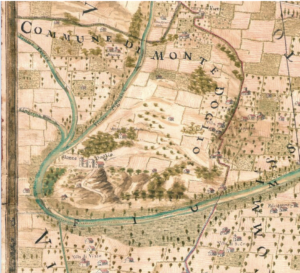
Il castello e i possedimenti dei conti di Montedoglio nel 1434
Pagine Altotiberine, 70 (2021), 181-202
The castle of Montedoglio (near Sansepolcro) and its dependencies were described in detail in a series of unpublished inventories dated 1432-34, from which we can deduce the richness of the rooms and the excellent state of the possessions, which made it a strategic control point of the upper Tiber Valley.
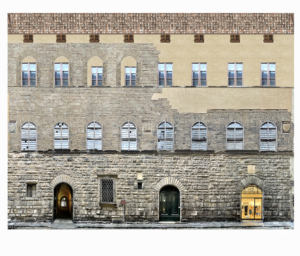
The Emergence of the New Florentine Oligarchy: Palazzo Alessandri as a Pre-Renaissance Prototype for the Palazzo Typology (1369-76)
Palladio. Rivista di Storia dell’architettura e restauro, 32, no. 65-66 (Dec 2020), 7-24
The construction of Palazzo Alessandri in Florence on Borgo degli Albizi during the 1370s signified the beginning of an architectural process that led to the formation of the Renaissance palazzo typology. Continuously inhabited by the same family of merchants who built it, the palace is the first one specifically designed only for residential purposes, a statement by its patrons meant to declare their social and political position in the city among the Florentine élite. The absence of shops on the ground floor allowed for a first among domestic residences in Florence: a solid façade made of rusticated pietra forte. Other notable features included a plan based on a regular grid, a large porticoed area, and a garden in the back. The Alessandri, together with the following palaces built by the members of the Albizi oligarchy (1384-1432), paved the way for the eventual design and the success of Palazzo Medici.
“Before Palazzo Medici: Earlier Domestic Traditions in Shaping the Renaissance Palace in Florence, 1380-1420
Art and Experience in Trecento Italy, ed. by H. Flora and S. Wilkins (Turnhout: Brepols, 2019), 117-31
The impressive palace built by Michelozzo for Cosimo de’ Medici in 1444 is usually considered to be the first example of a Renaissance palace, a striking novelty in relation to the contemporary status of local domestic architecture. Traditional scholarship explains Palazzo Medici’s innovative characteristics by reference to a renewed interest in the study of antiquity by early Quattrocento architects and patrons. On the other hand, a few other scholars have emphasized the persistence of Trecento traditions in early Florentine Renaissance architecture.
In this essay, I argue that it is possible to trace a clear stylistic progression in earlier domestic structures that made the design of Palazzo Medici possible. Architectural features such as a solid, rusticated façade with a street bench, a centrally located portal on axis with a square courtyard surrounded by a columned portico, and an adjacent garden, amongst others, were already employed in palaces erected by the preceding two generations of wealthy Florentine merchants.