ABOUT pupilli
PUPILLI – Domestic Inventories of Early Modern Florence engages with more than 3,000 household inventories to reconstruct domestic and urban spaces in Early Renaissance Florence between 1382 and 1530. It provides both qualitative and quantitative data for scholars and students to map specific domestic architectural spaces and general trends in both urban and rural settings during the period considered. PUPILLI employs domestic inventories found in the archival collection of the Magistrato dei Pupilli avanti il Principato, a public office in the city of Florence that managed properties left to widows and orphans until a male heir became legally adult. This rich documentation has served as a starting point for publications on the dissemination of works of art and related collection practices, the circulation of manuscripts, the presence of weapons and slaves, and the division of the household into gendered spaces.
For more information about the project, see the list of publications based on the Pupilli inventories, and check regularly future scheduled events or the list of past presentations/fieldwork.
Why inventories?
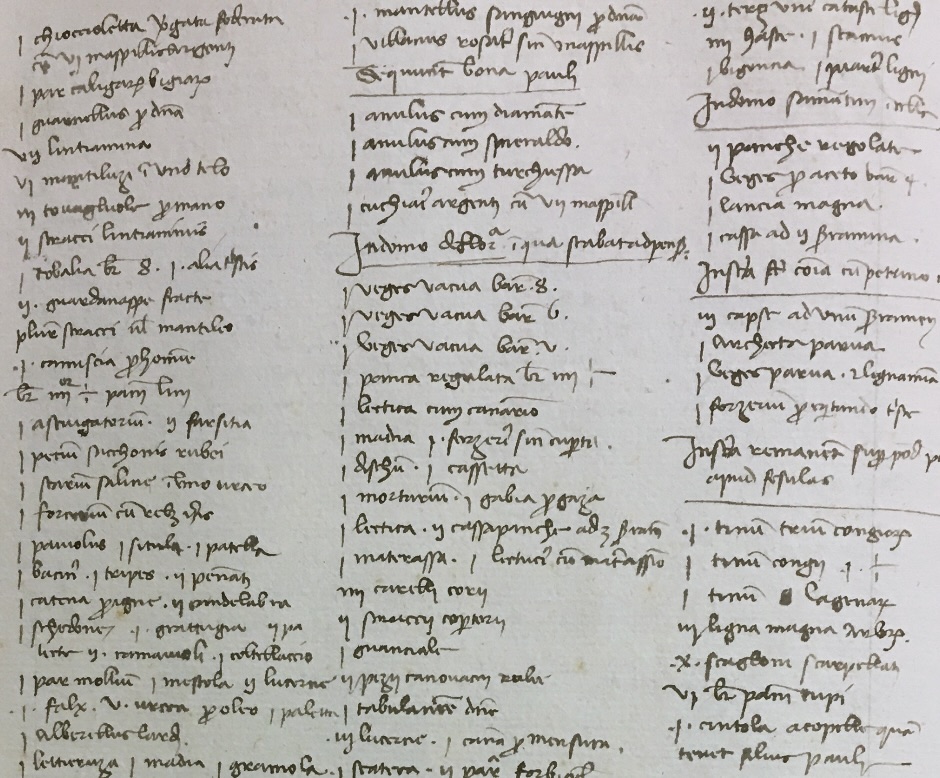
“Inventories, in any case, are worth publishing (and reading) for their own sake. They more than any other kind of document make us think about terminology, function and context, and about the distortions in our picture of the material products of a past culture if we judge them solely by what happens to survive.”
John Sherman, “The Collections of the Younger Branch of the Medici,” The Burlington Magazine, 117, No. 862 (1975): 14-27, 14
Architecture/1: Palace facades
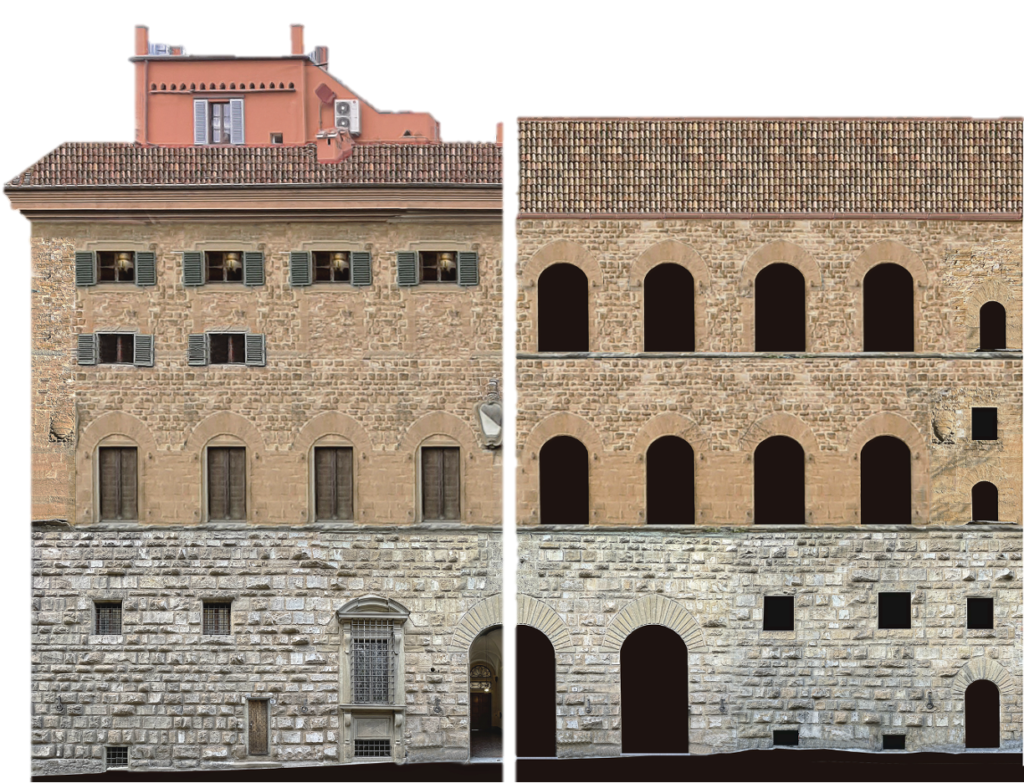
Pupilli inventories have been crucial in reconstructing the hypothetical original appearance of late medieval and early Renaissance Florentine palaces. Based on 3D laser scan surveys carried out by Prof. Bent for the Florence As It Was project, and cross-referenced with archival material from family collections and reports prepared by public restoration offices, palace facades have been digitally restored to their appearance at the time of their construction. In the picture on the left, the facade of Palazzo Uzzano-Capponi in the current state (left side) and at the time of the 1424 inventory (right side).
Architecture/2: Interior organization
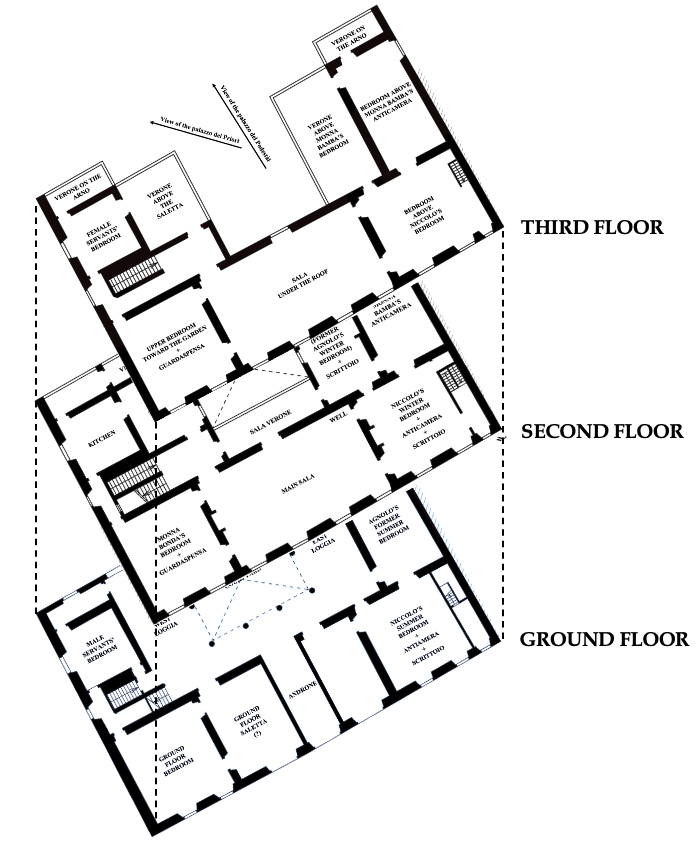
Pupilli detailed inventories allow the reconstruction of architectural spaces and their functional network, identifying areas generated by male/female, private/public, and residential/commercial dichotomies, and facilitated by the multiplication of spaces and their increased specialization in residences at the end of the Trecento. On one hand, the courtyard became a more stylistically controlled and highly regulated space, replacing the traditional family loggia, and indicating a withdrawal from civic engagement in favor of the interests of the immediate family. On the other, these new palaces reorganized private areas, multiplying spaces around the camera, which provided buffer zones protecting the family’s privacy (anticamera, cameretta, salotto), and created space for the first specialized amenities (guardaroba, necessario, stufa, scrittoio). This set of additional rooms were often built for each adult in the family, revolutionizing the traditional interactions among family members.
Everyday objects
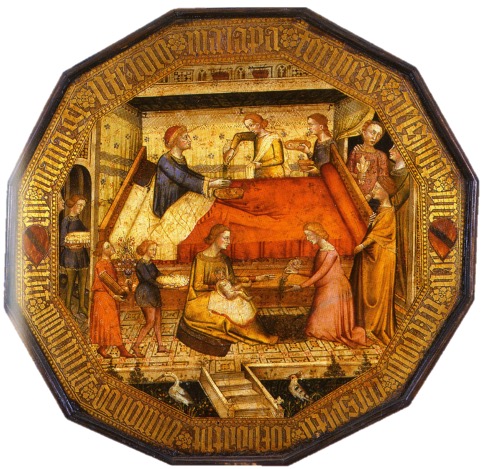
Historical inventories such as the ones in the Pupilli collection provide invaluable insights into the lifestyles of early modern Florentines by detailing the possessions and daily objects that populated their homes. These records catalog a wide array of items, from mundane household goods to luxurious artifacts, allowing historians to reconstruct the living conditions, social structures, and cultural values of the time. Moreover, such inventories often include information about the owners’ social status and economic activities, providing a comprehensive picture of their daily routines and interactions.
Collecting & Learning
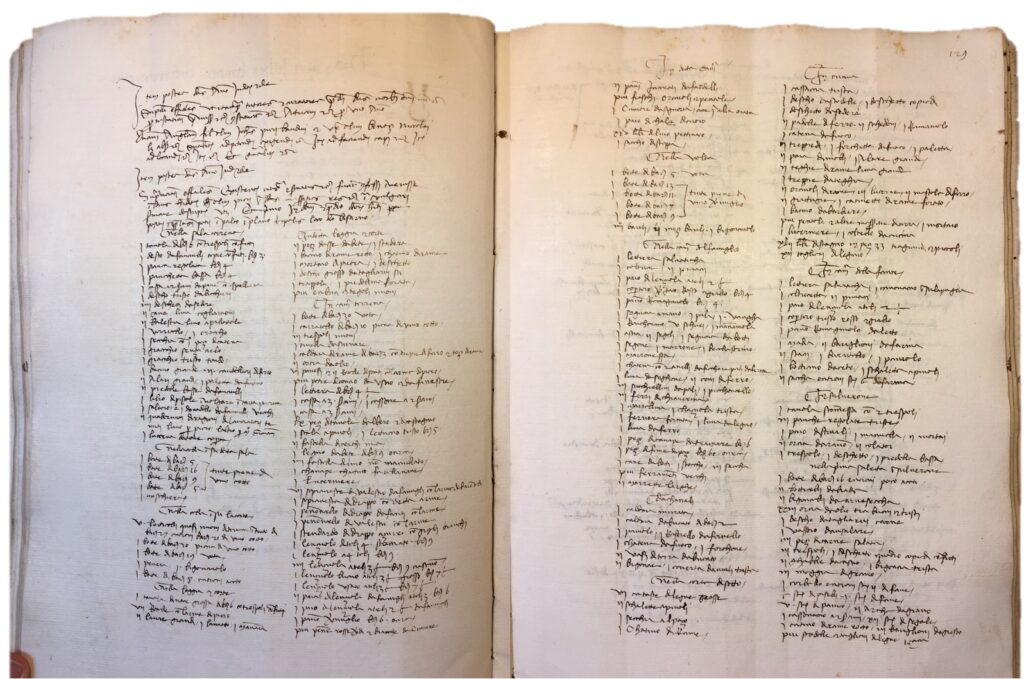
Among the large number of manuscripts and writing tools listed in the inventories, the documents reveal the emergence of the personal study room, which was central to understanding the shift in lifestyle from late medieval practices. For the first time, the residences of this period included, from their construction, a specific room labeled in inventories as scrittoio: a dedicated study room, separate from where business was conducted. This space was the prototype for the later humanistic study room called the studiolo, appearing much earlier than the examples in Ferrara and Urbino.
A contract with Olschki has been signed for the publication of a book that will include the list of all books listed in the Pupilli inventories.
future online database
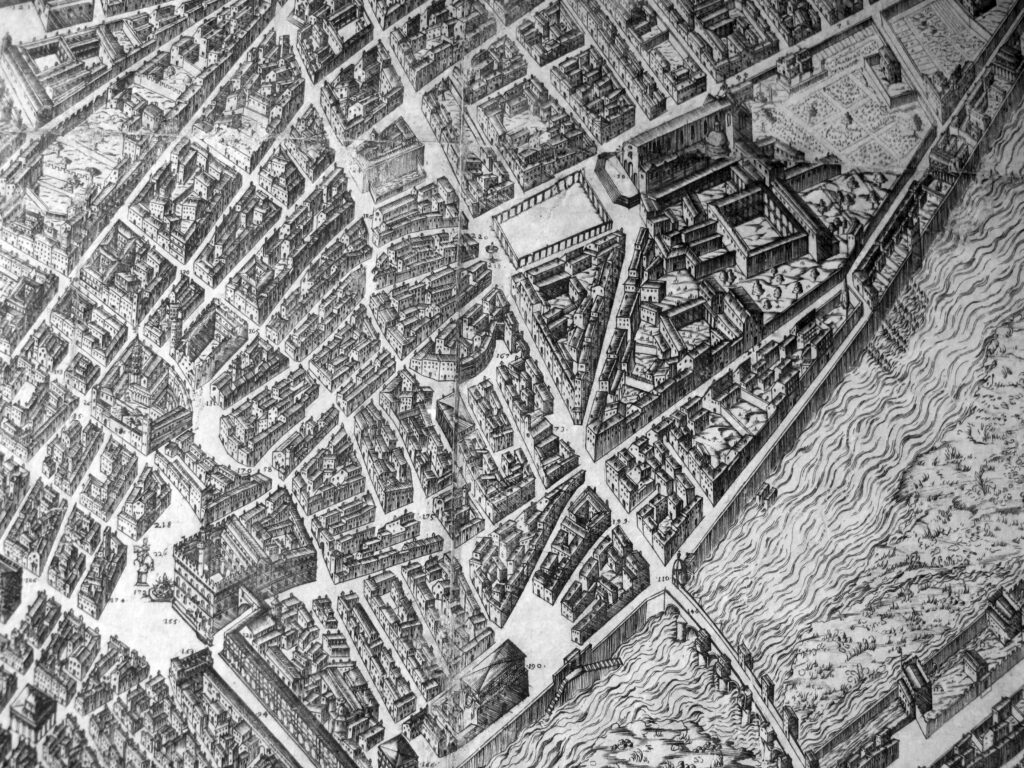
The Pupilli project will be incorporated into the publicly accessible online database Florence Illuminated, based on OCHRE technology and hosted at the University of Chicago. From the same webpage, users will be able to search records that include data from the inventories of Pupilli, tax declarations from the 1427 Catasto, family and funeral monuments from Digital Sepoltuario, works of art and 3D architectural models from Florence As It Was, and military records from Militia. For the first time in the history of traditional and digital scholarship on Renaissance Florence, the city is approached in its entirety. Instead of studying single buildings (churches, major palaces), this project examines every single property, regardless of the social class, occupation, or origin of the household members. The result is a comprehensive understanding of the fabric of Florentine society in all its complexities.
archival collection
Established by a provision on July 30, 1393, the magistracy of the Ufficiali de’ pupilli et adulti took over responsibilities that had been managed for about a decade (since the provision of December 14, 1384) by the Ufficiali del Monte. These duties included protecting minors whose fathers had died without appointing a guardian, as well as safeguarding the rights and property of widows, particularly in matters concerning their inheritance and the execution of wills.
By the fifteenth century, the magistracy’s role expanded to include the care of socially vulnerable individuals with physical or mental disabilities, such as the mute, the deaf, and the mentally impaired (provision of August 18, 1473). The magistracy was responsible for overseeing civil cases involving those under its protection and handling criminal cases related to fraud or theft committed against them. However, if the officials failed to reach a verdict within a year, jurisdiction over the case was transferred to the Mercanzia tribunal.
The Ufficiali also had the authority to appoint external individuals, known as “actors,” who were tasked with protecting minors and incapacitated persons, primarily by managing their assets. Under the practice known as procura (power of attorney), estate curators were required to secure guarantors and provide an annual report on their activities each November and December if their role extended over a long period. If their appointment ended earlier—either due to resignation or the completion of proceedings—they had to submit their report within a month. Guardianship of a minor ended when the ward reached adulthood or, in the case of a female, upon marriage. Strict regulations were in place to prevent officials from having personal financial interests in relation to the wards under their care.